Culture Column — Passing the Warmth of Craft through Words

Craft with warmth, culture with depth

Here we document the stories behind every process, exploring the millennia of wisdom in handmade ceramics, olive nut carving, and zen woodwork.

Why Jianzhan?

30 seconds to understand 800 years of craft

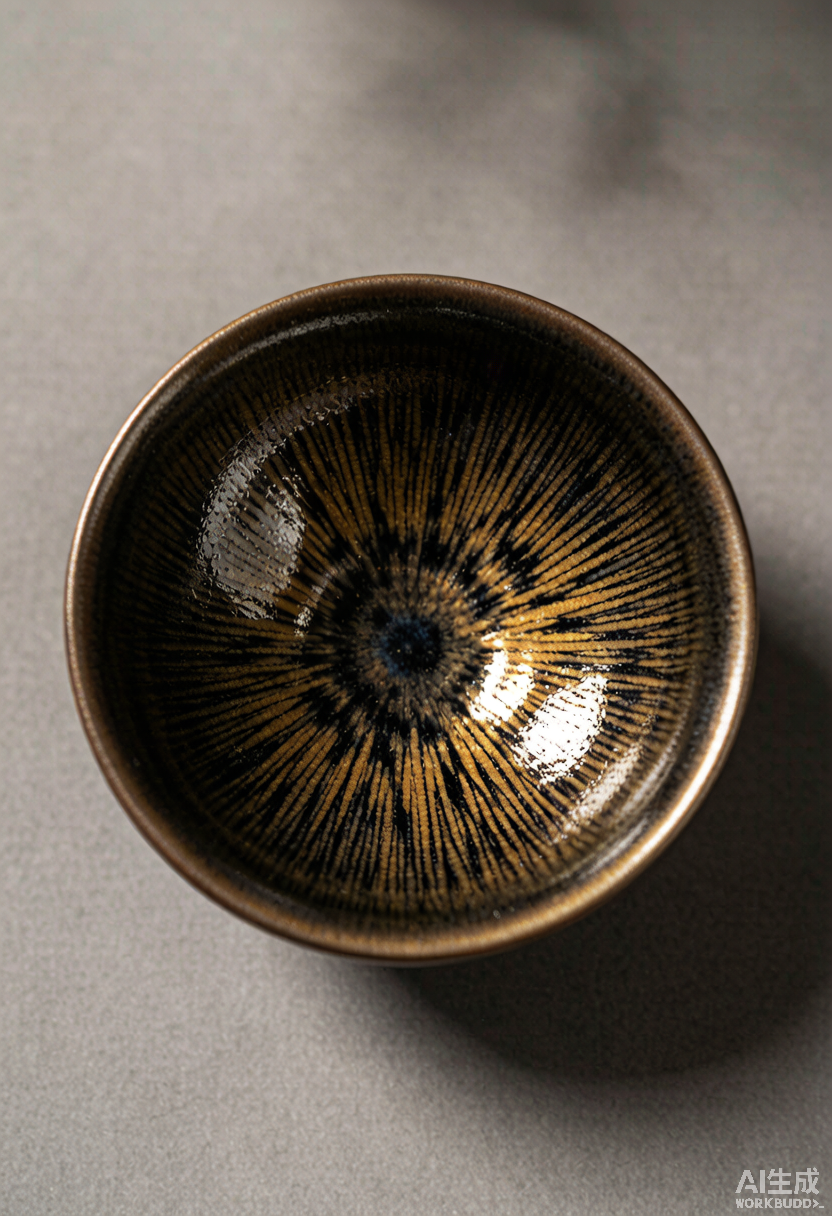
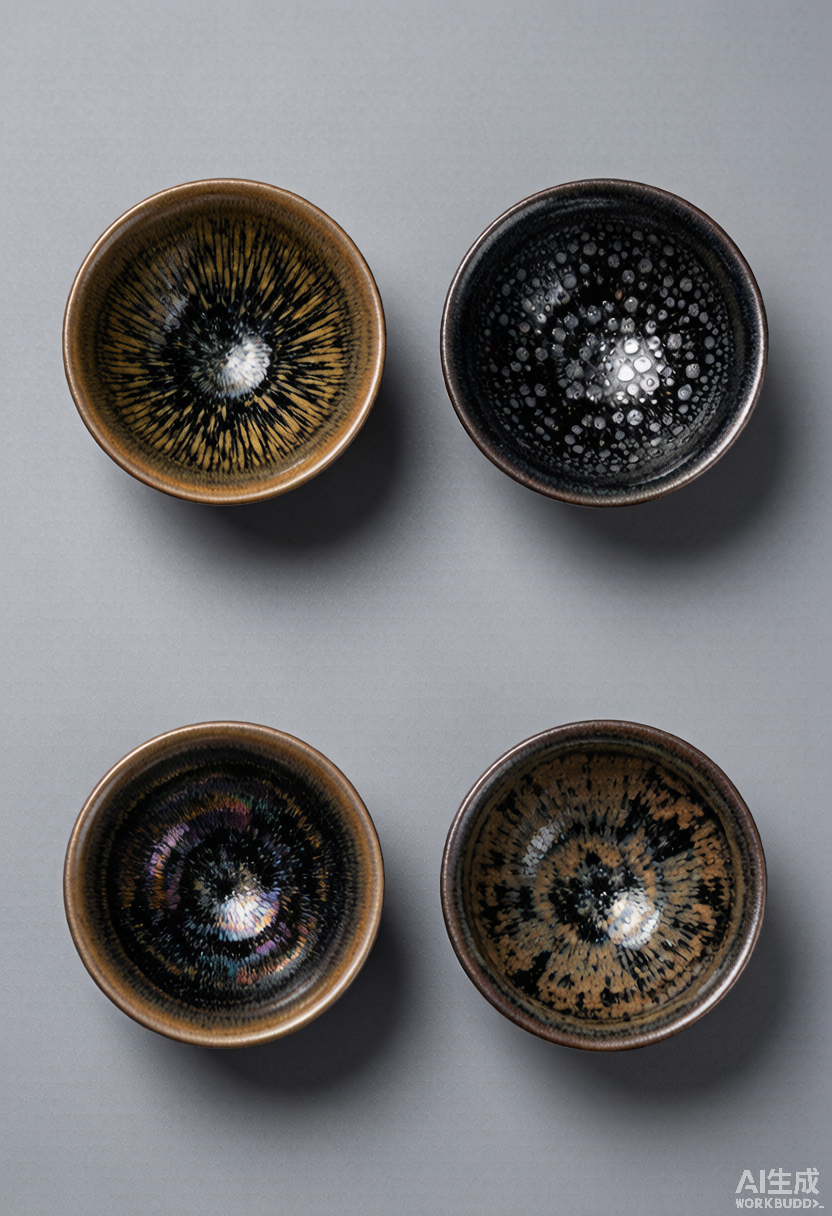
Golden Hare's Fur
Same kiln.
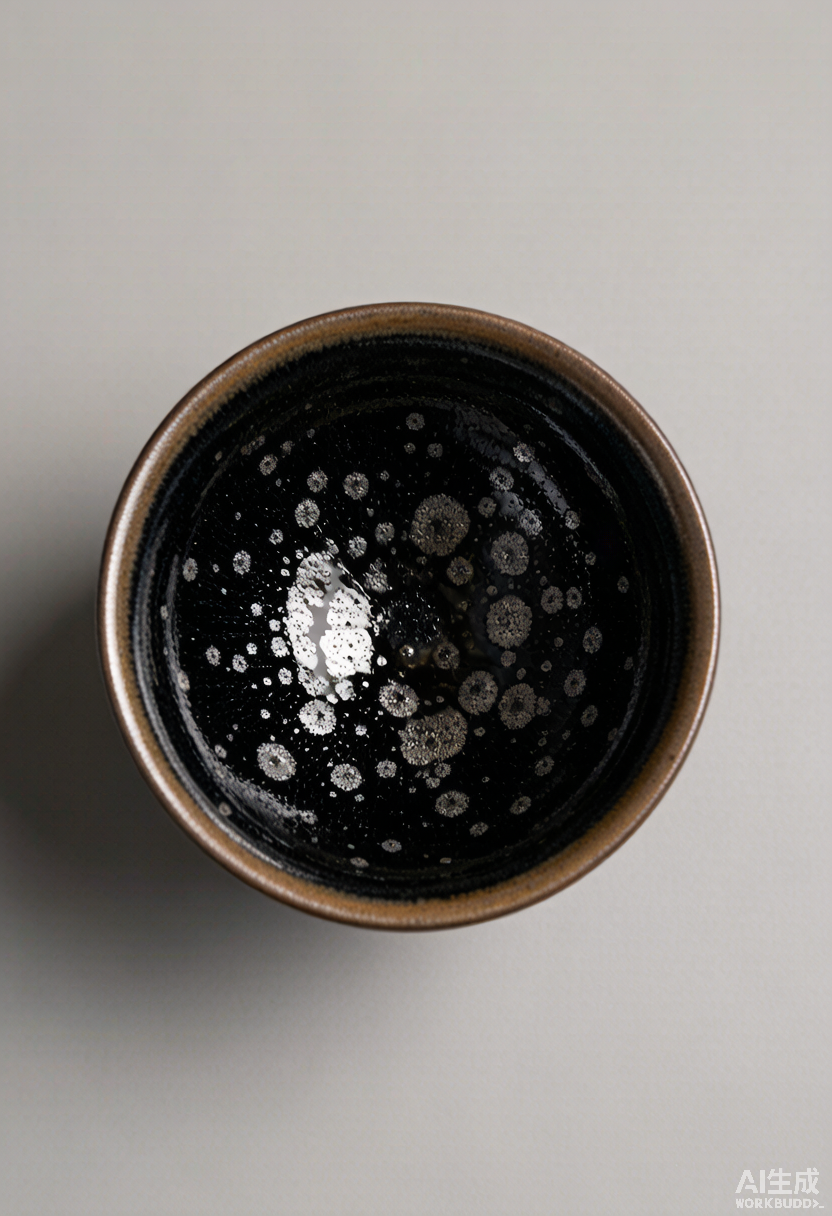
Oil Spot
Different colors.
Why?
Position in the kiln
Temperature variation
Mineral reactions
Each piece is a gift from the fire.
Four Patterns

No two are alike.

Every piece is one of a kind.

100% handcrafted
20+ master artisans
Zero mass production
Products
Vivova
Craft with Warmth, Culture with Depth
vivova.net
Explore the collection
0.0s / 30.0s

Cultural Articles

A Millennium of Hand-Painted Ceramics

From Jingdezhen celadon to Ming-Qing fencai, Chinese porcelain painting spans a thousand years. Each hand-painted cup embodies the artisan's deep understanding of clay and fire. This article traces the origins of handmade ceramics, decodes core techniques like underglaze blue and overglaze enamel, and takes you into the studios of porcelain painters.

I. Clay Meets Fire

China is the birthplace of porcelain. As early as the Eastern Han Dynasty, potters in Shangyu, Zhejiang, fired true celadon—over 1,600 years before Europe. The birth of porcelain arose from artisans' repeated experiments with kaolin clay and glaze formulas: iron content determines the depth of green, firing temperature affects glaze luster, and subtle changes in kiln atmosphere can mean the difference between verdant and sallow. This ability to converse with materials forms the technical foundation of Chinese porcelain painting.

II. Landscapes at the Brush Tip

Porcelain painting is not simply "drawing on bowls." It divides into underglaze and overglaze systems: underglaze blue uses cobalt pigment on raw bisque, covered with transparent glaze and fired at 1300°C, the color sinking beneath the glaze to last millennia; overglaze fencai is painted on fired white porcelain and re-fired at 700-800°C, yielding rich, soft tones as delicate as gongbi painting. A fine hand-painted cup may pass through dozens of steps—from lining to water-shading to firing—where any error is irreparable.

"The hardest part of porcelain painting isn't technique—it's waiting. Waiting for clay to dry, for glaze to settle, for the kiln to cool. An artisan's life is mostly spent waiting." — Jingdezhen master painter

III. From Workshop to the World

Today, handmade ceramics reach the world as never before. Contemporary artisans inherit traditional techniques while infusing modern aesthetics into form and composition—a single hand-painted cup may bear both Song Dynasty landscape spirit and minimalist negative space. Vivova's ceramics series practices this philosophy: partnering with Jingdezhen artisans, we preserve hand-throwing and traditional painting while integrating contemporary design, making each piece both a functional daily object and a tangible cultural memory.

Olive Nut Carving — Infinite Possibilities in a Single Pit

Olive nut carving is a treasure of Chinese micro-carving art. On a pit just 3-4 centimeters long, artisans carve eighteen arhats, boats on the Red Cliff, birds and flowers—with infinite detail in a tiny space. This article explores Zhoushan village and the full process of Chinese micro-carving, and how nut carving bracelets evolved from traditional playthings to contemporary design icons.

I. A Pit's Past and Present

Wei Xueyi's Ming Dynasty essay "The Nuclear Boat" made carving art famous: a peach pit carved with Su Dongpo boating at Red Cliff, with windows that open and close and lifelike figures. Olive nut carving rose later—olive pits are dense and warm-toned, ideal for fine carving—and flourished by the mid-Qing Dynasty. Suzhou's Zhoushan village became the heartland, with hundreds of workshops still carving today. The essence of Chinese micro-carving lies not in "small" but in "vast within the small."

II. Knife as Mind

Olive nut carving uses just a dozen tools: flat, round, pointed, and scraping knives, each with its purpose. Selecting the pit is step one—good pits are thick-walled, well-shaped, and fine-grained; aged pits surpass fresh ones as they've lost moisture and resist cracking. After sketching, rough carving removes excess material; fine carving defines facial expressions and drapery folds, where one wrong stroke can ruin days of work. Finally, polishing and oiling give the surface an amber-like glow. A nut carving bracelet takes a week to months to complete.

"Carving a pit is like cultivation. When the mind is calm, the knife is steady; when the knife is steady, the spirit emerges." — Zhoushan master carver

III. From Plaything to Bracelet

Traditional nut carvings were single-piece playthings for scholars' desks or sleeves. Contemporary carvers string multiple carved pits into bracelets, bringing this ancient art into daily wear. On a nut carving bracelet, eighteen arhats each have distinct expressions—fierce, smiling, contemplative—together forming a miniature scroll. Vivova's nut carving series collaborates deeply with Zhoushan artisans, preserving traditional motifs while developing simpler patterns for everyday wear.

Zen Woodwork — From Raw Timber to Mind and Object

Woodwork is among the oldest crafts. Zen woodwork is not just technique but a mindfulness art—when the artisan's hand touches the grain, noise fades, leaving only the dialogue between wood and knife. This article traces mortise-and-tenon philosophy, the design principle of "following the wood's nature," and how wooden crafts become a medium for returning to inner stillness.

I. Wood Has Its Nature

Every piece of wood has its own temperament. Walnut grain is bold, suited for large furniture; boxwood is fine-textured, ideal for small pieces; sandalwood carries a distant fragrance, beloved by scholars. Choosing wood is like choosing a friend—you must understand its grain direction, moisture changes, and hardness. Freshly cut wood has high moisture and must air-dry for months or years; rushed wood inevitably cracks. The first lesson is reverence: follow the wood's nature, don't conquer it. This is the starting point of zen woodwork.

II. Philosophy in Mortise and Tenon

The soul of Chinese woodwork lies in mortise-and-tenon joints. Without a single nail or glue, two pieces of wood interlock—convex as yang, concave as yin—forming a connection that holds for centuries. A well-made dovetail joint tightens under force. When carving a mortise, the artisan is fully present, shaving away excess stroke by stroke—this itself is mindfulness art: focusing on the present, feeling each knife meet the grain. The charm of wooden crafts lies in this unity of structural beauty and mental stillness.

"When I work wood, I think of nothing else—only how the grain will flow under this cut. The wood and my hands decide, not me." — Woodworker's journal

III. Objects Carry the Way

The ultimate pursuit of zen woodwork is making objects an extension of the mind. A wooden bowl's curve should fit the palm perfectly; a plate's rim should leave room for fingertips. These seemingly small designs reflect the artisan's care for the user. Vivova's zen woodwork series insists on hand-cutting and hand-sanding, preserving natural grain and touch, pursuing minimalist forms—removing unnecessary decoration so the wood grain itself becomes the best ornament.

East Meets West — When Eastern Craft Encounters Western Design

East meets West is not a slogan but a centuries-long cultural dialogue. From export porcelain with Rococo patterns to contemporary designers merging mortise-and-tenon with Scandinavian furniture, fusion craft seeks resonance between Eastern and Western aesthetics. This article explores three dimensions of cultural crossover and Vivova's design practice.

I. Export Porcelain: The Earliest Cultural Crossover

In the 16th century, Portuguese ships carried Chinese porcelain to Europe, sparking a "Chinoiserie" craze that lasted three centuries. Jingdezhen potters began customizing armorial and religious-themed porcelain for European markets, blending traditional blue-and-white technique with Western composition and perspective. This was the earliest East meets West practice—the collision of Eastern craft and Western demand gave rise to unprecedented forms. Fusion craft is not dilution of tradition but new possibilities born from collision.

II. Three Dimensions of Fusion

Contemporary East-West fusion unfolds on three levels. Technique exchange: Western steam-bending combined with Eastern mortise-and-tenon creates furniture both light and strong. Pattern fusion: Song Dynasty lotus scrolls redesigned as minimalist geometric motifs for hand-painted cups. Function reconstruction: olive nut carving from plaything to wearable bracelet, zen woodwork from tea ceremony to daily desktop storage. Each dimension serves one core idea: letting traditional craft respond to real contemporary needs.

"Tradition is not ashes but a flame. What we must protect is not the warmth of ashes but the continuing burn of the fire." — Vivova Design Director

III. Vivova's Fusion Practice

Vivova practices cultural crossover in product design. Our ceramics series blends Jingdezhen blue-and-white with Nordic minimalist palettes. Our woodwork series draws on Japanese proportions and Chinese joinery for compact living. Our nut carving series collaborates with contemporary jewelry designers, setting traditional carvings in silver frames to make nut carving bracelets a cross-cultural wearable language. Fusion is not compromise but letting two cultures each shine within a single object.

Why Handmade Matters

In an era of mass production, why handmade matters deserves a serious answer. An artisan good may cost ten times its assembly-line counterpart, but it carries time, skill, and emotion that cannot be replicated. This article examines three core values of handmade goods through the lens of craft authenticity: irreplaceable uniqueness, the warmth of artisan spirit, and sustainable living.

I. Uniqueness: No Two Are Alike

Machine-made cups—ten thousand identical. Hand-thrown porcelain, however, varies subtly in curve, thickness, and glaze—this one's rim slightly flared, that one's glaze with a streak of kiln transformation. These "imperfections" are precisely the proof of craft authenticity. The value of handmade lies not in standardization but in irreproducibility. When you own a hand-painted cup, no second one in the world is exactly the same.

II. Warmth: The Artisan's Handprint

Handmade objects carry warmth. This warmth comes from the artisan's "handprint"—the pressure of fingertips during throwing, the tremor of the carving knife, the temperature of the palm during sanding. In industrial products, these traces are removed as "defects"; in artisan goods, they are the soul. When you run your finger along a hand-sanded wooden bowl's interior, the texture isn't mechanically uniform but carries a rhythm—the artisan's breath from a certain afternoon. Why handmade matters? Because it conveys not just function but another person's time and intention.

"Every handmade object is a letter with no addressee, waiting for someone to open it." — Japanese Mingei philosophy

III. Sustainability: Less but Better

Choosing handmade is also a practice of sustainable living. The logic of fast consumer goods is "cheap—wear out—discard—rebuy," while artisan goods follow "cherish—use—pass down." A handmade teacup may accompany you for decades, even generations. It won't go out of style, because the beauty of handcrafted objects doesn't depend on trends but on the enduring quality of material and craft. Why handmade matters? Because it teaches us to cherish again—to cherish objects, and the person who poured skill and time into them.

Jianzhan — A Universe Born in Kiln Fire

Jianzhan, the black-glazed tea bowls born in the Song Dynasty kilns of Jianyang, are the most legendary tea vessels in Chinese ceramic history. At 1300°C, glaze minerals flow and crystallize naturally inside the kiln, forming iridescent, hare's fur, and oil spot patterns—each Jianzhan is a unique "masterpiece of the kiln god." This article traces 800 years from imperial tea bowls to lost-and-revived firing techniques.

I. Song Tea Culture and the Birth of Jianzhan

During the Northern Song Dynasty, whisked tea became fashionable, and Emperor Huizong himself was an avid tea practitioner, authoring "Daguan Tea Treatise." Whisked tea required dark bowls to showcase the white foam, making Jian kiln black-glazed bowls the imperial choice. The Jian kilns in Jianyang, Fujian, used iron-rich glaze fired at 1300°C, where glaze minerals naturally flow and crystallize into ever-changing patterns. The greatness of Jianzhan lies in this: its beauty is not painted by human hands but "painted" by kiln fire—the artisan controls formula and temperature, but never the final pattern.

II. Yohen, Hare's Fur, and Oil Spot — Three Legendary Glazes

Jianzhan glazes come in many varieties, the most precious being Yohen Tenmoku. Yohen bowls display blue, purple, and gold iridescent halos in light, like cosmic nebulae. Only three and a half complete Yohen Jianzhan survive, all in Japan, designated as National Treasures. Golden hare's fur bowls feature fine golden streaks flowing from rim to base, a prized Jianzhan type. Oil spot bowls have silver-white circular spots on black glaze, like oil drops on water. Each Jianzhan undergoes about 72 hours of firing, with a success rate under 30%.

"The beauty of Jianzhan lies in the unpredictable. No two from the same kiln are alike. The kiln god decides." — Jianyang Jianzhan artisan

III. Lost and Revived — 800 Years of Waiting

When whisked tea declined in the late Southern Song, Jianzhan faded, and the firing technique was lost entirely by the early Yuan Dynasty. Not until 1981 did Jianyang ceramic researchers, after years of experimentation, successfully re-fire hare's fur bowls—Jianzhan technique reborn after 800 years. Contemporary artisans now apply Jianzhan aesthetics to modern life, creating coffee cups, mugs, and cola cups alongside traditional tea bowls. Vivova's Jianzhan series features selected works from Jianyang kiln artisans, each fired at 1300°C with naturally formed patterns.

AI Meets Heritage — The 2026 Cultural Gift Trends

AI customization is no longer a novelty — it is the new standard. From AI-assisted design previews to low-MOQ custom orders, from emotional value to heritage in everyday objects, the 2026 cultural gift market is undergoing a quiet revolution. This article explores five key trends and how Vivova combines AI with traditional craftsmanship.

I. AI Empowerment: From Design Preview to Physical Delivery

The biggest shift in 2026 is the deep fusion of AI design tools with physical manufacturing. Customers no longer just pick from a catalog — they co-create. AI-assisted design platforms let customers generate unique patterns, engraving schemes, and color combinations in real time: a corporate HR manager uploads a logo and sees a rendered preview of it engraved on 500 pens within minutes; a parent turns a child's drawing into a ceramic decal for a custom mug. What makes this meaningful is not the technology alone, but its combination with traditional craft — AI generates the design, artisans execute it with techniques passed down through generations. Vivova's customization process works exactly this way: customers upload reference images, choose patterns and engravings, and artisans hand-craft each piece after design confirmation.

II. Emotional Value and Heritage in Everyday Life

Gen Z and millennial buyers now rank emotional value above utility when choosing gifts. The "dopamine economy" has become the dominant growth vector in the lifestyle category. This shows up in product design: soft vivid colors, tactile materials, and packaging that doubles as a display case. For gift buyers, the lesson is clear: a gift should make someone feel something before they even open it. Meanwhile, the China Chic movement continues to accelerate. The best products integrate cultural elements at the design level — a pen clip shaped like a Han Dynasty jade dragon, a tea cup glaze inspired by Song Dynasty Ru kiln, a bookmark hand-stitched with Suzhou embroidery silk. Intangible heritage techniques are finding new life not in museum storage, but in everyday usability.

"The best gift is one that moves you before you even open it. Technology gives us speed and precision; craft gives us depth and soul." — 2026 Cultural Gift Trends Report

III. Vivova's Practice and Gift Guide by Budget

Vivova stands at the intersection of technology and tradition. Our customization service lets customers visualize engraving schemes and pattern combinations before ordering; our pre-production sample process ensures every custom piece meets expectations; we partner with artisans in Jianyang, Jingdezhen, and Suzhou to apply traditional techniques — Jianzhan glaze firing, underglaze hand-painting, olive pit micro-carving — to contemporary forms. We've also organized a gift guide by budget: under $30 for everyday thoughtfulness — hand-painted plum blossom mugs, olive nut bracelets; $30–$80 for meaningful milestones — golden hare's fur Jianzhan tea bowls, custom engraved pieces; $80+ for collector-grade gifting — Arhat nut carving bracelets, Jingdezhen hand-thrown tea sets. Whatever the budget, every Vivova piece carries the same belief: the best gifts are the ones that tell a story.

How to Identify an Authentic Jianzhan — A 4-Step Guide to Spotting Fakes

As searches for Jian Zhan tea cups grow 67% year over year, fakes are flooding the market. Chemical-glaze hare's fur, decal-printed oil spots, machine-pressed bodies pretending to be hand-thrown — how do you confirm your Tenmoku tea bowl is genuine iron-crystal glaze? This guide offers a 4-step authenticity check anyone can perform: examine the glaze, weigh the body, test absorption and magnetism, and smell for chemicals.

I. Where Fakes Come From

Jianzhan's patterns come from iron-crystal glaze — iron oxide at up to 8% concentration undergoes reduction inside the 1300°C kiln fire, naturally precipitating crystalline patterns. The process is uncontrollable, the success rate stays under 30%, and prices remain high. The fake-maker's logic is simple: skip the kiln's unpredictability and "paint" hare's fur and oil spots directly with chemical glazes. Three common types: chemical-glaze bowls fired with lead- or cadmium-bearing low-temperature glazes, with stiff, uniform patterns at one-tenth the cost; decal bowls, where oil-spot patterns are printed as transfers and sealed under glaze, the spots spaced as regularly as print; and machine-pressed bowls that replace hand-throwing, losing the natural weight of a true Jianzhan body.

II. The 4-Step Authenticity Check

Step one: examine the glaze. Authentic Jianzhan patterns have an organic, grown quality — hare's fur streaks flow from rim to base with varying thickness and frequent branching; oil spots vary in size with softly diffused edges. Fake patterns are uniform and rigid, with spots stamped as crisply as a rubber seal. Under side light, real glaze shows flow — the glaze moved downward in the heat, thinning dark at the rim and pooling into drops near the base, traces chemical glazes can hardly imitate. Step two: weigh the body. Jianzhan clay is iron-rich, noticeably heavy in hand, coarse-textured with visible sand grains and pores; the foot ring is usually unglazed, gray-black or iron-brown. Step three: test magnetism and absorption. An iron body is faintly magnetic — a strong magnet will feel a slight pull (not a snap); a drop of water on the unglazed foot absorbs slowly, because the clay is porous. Machine-pressed bodies are suspiciously fine and even. Step four: smell. Chemical-glaze fakes may release a pungent odor when rinsed with boiling water; a genuine bowl smells only of earth and kiln fire. Look also for "glaze tears" (teardrop-shaped pools where glaze ran) and tiny pinholes — these "imperfections" are precisely the ID card of a real Jianzhan.

"If you can't read the glaze, start with the foot ring. The clay never lies — the coarse weight of an iron body can't come out of a mold." — Jianyang Jianzhan appraiser

III. Three Rules for Buying with Confidence

Authentication skills take years, but buying principles start today. First, know the source: choose kiln-direct supply or clearly attributed artisan work, and ask for firing documentation. Second, distrust abnormal bargains: real electric-kiln Jianzhan has a floor cost — a "$9.99 with free shipping hare's fur bowl" is almost certainly chemical glaze. Third, ask if you can actually use it: genuine Jianzhan is food-safe, heat-resistant tableware for daily use; a seller who hedges with "display only" probably knows why. Every Vivova Jianzhan comes from Jianyang kiln artisans, labeled with its glaze type and firing process, with traceable provenance — we believe authenticity should never be homework the buyer does alone, but a promise the seller makes first.

Seasoning & Caring for Your Jianzhan — How to Grow the Iridescent Patina

When a new Jianzhan or Yixing clay teapot arrives, the first task isn't brewing tea — it's seasoning. "How to season a new clay teapot" is among the most-searched questions among teaware lovers, because proper seasoning and daily care decide whether the vessel can grow with you. This guide covers the 3-step Jianzhan seasoning method, the full Yixing pot seasoning process, and five daily-care taboos. With months of patient care, a Jianzhan glaze develops a warm "seven-color luster" — a joy reserved for those who tend their bowls.

I. The 3-Step Seasoning Method

From kiln to shelf, a new Jianzhan usually gets only a light cleaning — it needs to be "opened" before first use. Step one, boil in clean water: line a pot with a clean cotton cloth, place the bowl inside, cover fully with water, bring slowly to a boil and simmer gently for 20–30 minutes. The boiling water carries away kiln dust and wakes the clay body. Always start from cold water and heat gradually — thermal shock can crack the glaze. Step two, tea bath: replace the water, add a small handful of tea (black tea or ripe pu-erh work best), simmer for 10 minutes, then turn off the heat and let the bowl steep for an hour. Step three, air dry: remove, wipe with a soft cloth, and let the bowl dry in a ventilated spot for a day — never in direct sun. The body's pores are now open and the bowl is ready for service.

II. Five Taboos of Daily Care

The heart of Jianzhan care is "one bowl, one tea": use the same bowl for the same category of tea over time, so tea deposits build evenly on the glaze into a luminous sheen. Five taboos apply daily. No dishwashers or detergent — chemicals seep into the pores, leave odor, and block patina; rinse with clean water and wipe with a soft cloth instead. No abrasive scrubbing — the tea layer on the glaze is exactly where the luster comes from; steel wool "cleaning" resets months of progress. No sudden temperature swings — never run cold water into a bowl that just held hot tea; thermal shock is the leading cause of glaze crazing. No overnight stains — patina and grime are different things; same-day rinsing is the rule. And no sharing among many hands — skin oils mottle the glaze; one keeper, one bowl.

"There is no shortcut to raising a bowl — only diligence. Brew daily, rinse daily, and in three months the glaze will repay you brighter than any polish." — Teaware collector

III. The Secret of the Seven-Color Luster

The famous "seven-color luster" of a well-kept Jianzhan is light interference between the glaze's surface crystals and a thin film of tea polyphenols and mineral deposits — the glaze doesn't change; a new layer grows over it, flashing blue, violet, and gold at certain angles. To grow it, remember three things: choose the right bowl (moderately vitrified glazes take color fastest; heavily glassy ones barely change), drink the right tea (dark liquors like yancha, black tea, and ripe pu-erh deposit fastest), and stay patient (daily use shows change in two to six months). Yixing pots follow the same logic: the sandy pores absorb tea liquor until "the pot follows the tea, and the tea mellows with the pot." Every Vivova Jianzhan ships with a care card — from first seasoning to daily wiping — walking you through turning a new bowl into an old friend. Half of a vessel's beauty comes from its maker; the other half, from the one who uses it.

The Jianzhan Collector's Guide — From Daily Bowl to Heirloom

What makes a Jian Zhan tea cup worth collecting? The Western teaware collecting circle is growing fast, searches for collectible handmade teapots and Jianzhan keep climbing, and a wave of retiring master artisans is tightening supply of fine bowls — a window of value rediscovery. This guide lays out the complete framework for new collectors: the four value factors (glaze rarity, condition, artisan attribution, and yield rate), a three-tier progression path (daily — fine — collector grade), and a pre-purchase checklist for collector-grade buying.

I. What Determines a Jianzhan's Value

Jianzhan is an art of "heaven's work through human hands," and value is assessed on four dimensions. Glaze rarity comes first: yohen (iridescent) > yohen variants (such as peacock-blue yohen) > partridge feather > oil spot > hare's fur > plain black — the harder the glaze is to fire, the scarcer it is, with fine partridge-feather bowls yielding as few as three per thousand. Condition comes second: no chips, no hairline cracks, intact glaze — the baseline; traditional shapes like the constricted-rim and flared-rim bowls command more recognition for their proximity to Song forms. Artisan attribution comes third: bowls by provincial or national intangible-heritage inheritors and master craftsman far outrank anonymous workshop pieces — and note whether the attribution reads "hand-made by" (the artisan's own hands throughout) or "supervised" (produced to the artisan's standards). Yield comes fourth: the one-in-ten-thousand "kiln treasure" from a firing carries natural scarcity premium. Understand these four and you will see why two similar-looking bowls can be priced ten-fold apart.

II. The Three-Tier Progression Path

We recommend collectors progress through three tiers. Tier one, daily use ($30–$80): pick a moderately vitrified hare's fur or oil spot bowl for everyday brewing and learn while using it — the goal at this stage is to become fluent in glaze language, and the seasoning process itself is the best teacher. Tier two, fine pieces ($90–$200): acquire artisan-signed bowls, focusing on high-difficulty glazes like partridge feather and iridescent oil spots; start a collection archive recording each bowl's glaze character, kiln, and acquisition price. Tier three, collector grade ($400+): target works personally made by heritage inheritors or masters, and ultra-low-yield special glazes. Do the homework at this tier: compare auction records and market comps, require provenance documentation, and engage a third-party appraiser when in doubt. One market signal deserves attention: the Western tea ceremony revival is lifting export demand for Jianzhan while senior artisans are retiring — supply of fine bowls is tightening, and most industry voices read this as a window of value rediscovery.

"Collecting Jianzhan is collecting probability. Partridge feather is one in ten thousand; yohen, one in a thousand years — you are collecting a lottery ticket drawn by kiln fire, and a craft on which an artisan staked a lifetime." — Jianzhan collector

III. The Pre-Purchase Checklist for Collector-Grade Bowls

Before committing to a collector-grade Jianzhan, run through this checklist. Ask the source: kiln-direct, artisan-signed, or market resale? The shorter the chain of custody, the better. Check the paperwork: are the heritage-inheritor certificate and food-safety test report in order? Papers support identity — but a seller with "more certificates than bowls" deserves caution. Compare prices: benchmark at least three sellers for the same glaze and form, and find out why anything is clearly below market. Inspect the condition: rake a strong flashlight across the bowl at an angle to catch hairlines and chips, especially the foot and the rim. Keep records: payment receipts, provenance correspondence, and the artisan's label on the packaging — they are the credit foundation for future resale. Every collector-grade Vivova Jianzhan is documented with kiln, glaze, and artisan information and supported by traceable provenance. Our hope is simple: every bowl that enters your cabinet should tell a more valuable story ten years from now than it does today.

How to Choose Your First Jianzhan — A Guide to the Four Legendary Glazes

Hare's fur, oil spot, partridge feather, yohen — to a first-time Tenmoku tea bowl buyer, these names can sound like martial arts manuals. Which glaze suits the tea you drink? Which one makes the best gift? What can you get under $100? This is a plain-language Jianzhan buyer's guide for Western tea lovers: the character and ideal owner of each legendary glaze, how to choose shape and capacity, and recommendations by budget and occasion.

I. The Four Legendary Glazes at a Glance

Hare's Fur (Tu Hao): fine streaks flow from rim to base like a rabbit's down — the classic Jianzhan glaze. Affordable (very good ones sit at $40–$100), moderately vitrified and quick to develop patina; ideal for daily use and beginners. Oil Spot (Yuteki): silver or gold round drops scattered on black glaze like oil beads on water. Clear, naturally scattered spots make a striking display piece; the $70–$200 range is rich with choices — an impressive gift. Partridge Feather (Zhe Gu Ban): pearl-white spots recalling the partridge's breast feathers — larger, rarer, with a low success rate; fine pieces usually run above $200, suited to advancing players and collectors. Yohen: blue-violet-gold iridescent halos that shift with the viewing angle — the ceiling of Jianzhan. Only three and a half complete Song Dynasty yohen survive worldwide; modern re-fires are rare and expensive, mostly museum-grade. One-line summary: hare's fur for yourself, oil spot for gifting, partridge feather for collecting — and yohen for destiny.

II. Choosing Shape and Capacity

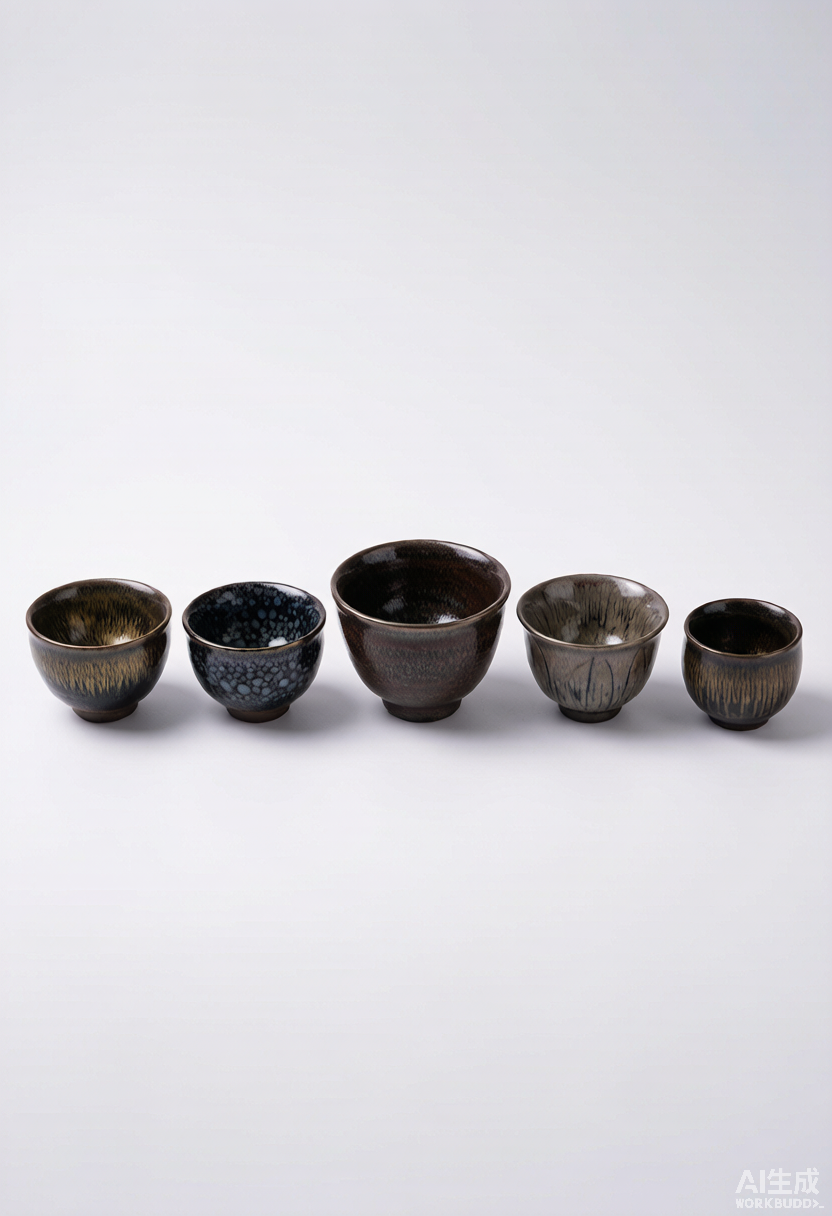
The constricted-rim bowl (shu kou) is the orthodox form — an inward fold below the rim gathers aroma and protects fingers, typically 100–160 ml, made for gongfu brewing and Chinese tea settings. The flared-rim bowl opens outward with a gentle curve, flattering the liquor's color — for unhurried sipping. If your daily cup is Western-style tea, coffee, or a latte, consider the contemporary forms: Jianzhan coffee cups and mugs keep the iron glaze's deep luster in a 300–400 ml body — thick-walled, heat-retaining, the easiest way to bring black-glaze aesthetics into daily life. The principle for choosing is simple: decide first when the bowl or cup will serve you each day — morning pour-over, afternoon black tea, or an evening dram — and the shape and capacity will decide themselves.

"There is no 'best' Jianzhan, only the one that fits your hand. Before buying, ask what hour of the day it will keep you company." — Teaware buyer

III. Matching Budget to Occasion

Under $50: a daily hare's fur bowl or a Jianzhan mug — more than enough for entry-level and everyday use, and the lowest barrier to the joys of seasoning. $50–$100: the sweet spot for oil spot bowls, where both spotting and vitrification step up; choose here for gifting occasions (birthdays, housewarmings, thank-yous) — an unboxing delight. $100–$200: artisan-signed fine bowls and entry partridge feather — for the tea lover in your life or a valued client. Above $200: collector territory; read our Jianzhan Collector's Guide before committing. Three universal tips: when buying internationally, confirm food-grade safety and shipping protection first (Jianzhan is heavy and fragile — professional packing matters); confirm the seller provides care guidance, because half the fun of a Jianzhan is in the tending; and don't chase a flawless pattern on your first purchase — as Jianzhan itself teaches, imperfection is what makes it one of a kind. The Vivova Jianzhan collection spans $30–$400, from hare's fur mugs to artisan fine bowls, each labeled with glaze and kiln information — to help you find the first bowl that is truly yours.

Moonlight & Kiln: The Q4 Artisan Gift Calendar from Mid-Autumn to Christmas

Less than 100 days separate us from Mid-Autumn, Thanksgiving, Black Friday, and Christmas. As the festive shopping season arrives, Chinese heritage crafts are becoming the new favorite of global gift-givers — online sales of intangible-heritage craft products are up 35% year over year, and heritage gift boxes integrating regional culture have grown over 25% annually for three consecutive years. This Q4 calendar breaks down the four festivals: what to give, how much to budget, and how to turn a Jianzhan bowl or hand-painted cup into a gift that tells a story.

I. Why Q4 Is the Golden Window for Chinese Heritage Gifts

The rhythm of the global gift market is clear: Q4 delivers roughly 40% of annual gift sales, and ceramic gift searches start climbing in August, peaking in late November. What changed in 2026 is that consumers no longer chase logos alone — online sales of intangible-heritage craft products are up 35% year over year, with buyers under 40 contributing more than 60% of that growth; premium gift boxes blending heritage elements and regional culture have sustained 25%+ growth in the Yangtze Delta for three straight years. Chinese crafts — Jianzhan tea bowls, hand-painted porcelain, woodwork, olive nut carving — sit right on this curve: they carry cultural stories, natural materials, and one-of-a-kind variation, exactly what the emotional-value era prizes most. In one sentence: giving an object is becoming "passing on a feeling," and craft is the best container for feeling.

II. Four Festivals, Four Gift Logics

Mid-Autumn (September 25): the festival of reunion and wholeness. Jianzhan tea bowls and hand-painted tea sets are the most fitting choices — round forms carry an implicit wish of completeness. Budget $50–$80 for an oil spot bowl or a pair of hand-painted cups; custom engraving (names, dates, a short blessing) makes the gift one of a kind. Thanksgiving (November 26): the festival of gratitude — ideal for landlords, teachers, and the neighbor who always helps; a $30–$50 hand-painted mug or olive nut bracelet with a handwritten card carries more warmth than any luxury brand. Black Friday (November 27): self-reward day. Jianzhan coffee cups and mugs — "everyday luxury" — sell best here and make natural limited bundles for email campaigns. Christmas (December 25): the recipient could be anyone. A Jianzhan tea cup as a Christmas gift is becoming a rising trend in Western tea circles — collector-grade nut carvings, zen wood ornaments, artisan-signed fine bowls, wrapped in a velvet box with a provenance card: a gift that can still tell its story a decade later.

"The best holiday gift is not the most expensive — it's the one that, years later, still reminds you of the festival and the person who gave it." — Vivova Gift Design

III. Vivova's Q4 Gift Program

We've prepared a program for every festival. Gift wrapping comes in three tiers (classic / velvet / wooden box), all with handwritten card messages; gift receipts hide prices by default, protecting both the giver's intention and the receiver's surprise. Customization covers engraving, patterns, and vessel forms, with a pre-production sample process so every piece matches expectations. Corporate bulk buyers can contact us directly for custom programs and tiered quotes. Whatever festival you're shopping for, Vivova's principle stays the same: let every gift say the words you couldn't say yourself.

Why American Tea Houses Are Embracing Jianzhan: The Handmade Cup as Daily Ritual

American tea houses are evolving into "third places": social but not frantic, thoughtful but not solemn. Handmade ceramics — Jianzhan above all — are winning the new tea house scene through material character and handmade variation. Handmade ceramic teaware is growing 18% year over year, and Jianzhan searches are up 23% as the Song dynasty revival piece. This updated piece unpacks what third-place 2.0 means, why Jianzhan hits the mark, and how far the handmade cup really is from the dining table.

I. Third Place 2.0: The Aesthetic Turn of New Tea Houses

The "third place" is the space between home and work. 2.0-era American tea houses no longer imitate the bustle of coffee shops, nor the austerity of formal tea ceremonies — they offer a middle ground that is "social but not frantic, thoughtful but not solemn": read alone at a table, or share a pot with a stranger. Tea Shop Association data across the coasts shows handmade ceramic teaware growing 18% year over year. Why? Because the new tea house logic of objects has shifted: instead of industrial uniformity, it prizes the material character of handmade work — the random flow of glaze, the subtle thickness of a wall — each piece a small chapter in the space's narrative.

II. Why Jianzhan: The Vessel Is the Story

In Western tea circles, Jianzhan is shifting from "oriental antique" to "contemporary daily object." It is the emblem of the Song dynasty tea ware revival — hare's fur, oil spot, and yohen patterns crystallized naturally in 1300°C kiln fire, no two alike — exactly the authenticity the new tea houses are after: handmade variation is not a flaw, it's identity. Meanwhile, the matcha wave is pushing Jianzhan toward gifting — winter tea ceremony workshops and holiday gift sets are about to surge. For a tea house owner, a single Jianzhan bowl on the tea table is a silent brand statement.

"A tea house's vessels are its language. We chose Jianzhan because it says 'real, slow, one of a kind' for us." — Portland tea house owner

III. From Tea House to Table: Bringing Ritual Back to Everyday Life

The tea house is just the beginning. The path of Jianzhan into daily life is shorter than many think: a Jianzhan mug for your morning pour-over, a Jianzhan tea cup for afternoon tea, even contemporary forms for whisky and cola. Our understanding of "daily ritual" is simple: you don't need a full tea table — one cup with a comfortable grip and a deep glaze is enough to remind you to slow down, take a sip, breathe. The Vivova Jianzhan collection spans traditional constricted-rim bowls to contemporary coffee cups and mugs, all made by Jianyang kiln artisans and labeled with glaze and firing process. From tea house to table, we want this Song dynasty aesthetic to keep you company on every ordinary day.

Three Gift Guides Worth Saving: Under $50, Housewarming with Heritage, Anniversary Tea Sets

After the flood of AI-generated content, consumers' willingness to pay for "real handmade" is rising — Etsy reports that listings tagged "artisan made" see +28% click-through and +19% conversion. Anti-AI handmade storytelling is becoming standard for a new generation of craft brands. This three-in-one gift guide covers the three most valuable gifting scenarios of 2026: small but meaningful gifts under $50, housewarming gifts with heritage, and anniversary tea gift sets that tell a story.

I. Small but Meaningful: Warmth Under $50

A tight budget doesn't mean less heart. Under $50, we recommend three "small but meaningful" picks: hand-painted mugs ($18–$28) — painted by Jingdezhen artisans, plum blossoms, bamboo, landscapes; the cup you drink from daily is the gift most often remembered; olive nut bracelets ($15–$32) — micro-carved by Suzhou Zhoushan artisans, eighteen arhats or plain beads, wearable and hand-held; wooden small pieces ($12–$28) — sandalwood or rosewood ornaments, bookmarks, incense rests that bring stillness to a desk. The keyword is "frequency of use": the more a gift is used, the more often the recipient thinks of you.

II. Housewarming with Heritage: Gifts with Cultural Memory

The art of the housewarming gift is giving a new home its own character. Objects with cultural memory make a new home feel storied instantly: hand-painted vases ($55–$80) — the living room centerpiece once flowers arrive, underglaze-painted in Jingdezhen so the colors never fade; Jianzhan tea sets ($60–$120) — an oil spot bowl paired with a tin of tea, because a new home's first pot deserves a worthy vessel; zen wood carvings ($42–$70) — meditative motifs for the study or the entryway. The hidden value of such gifts is heirloom quality: they are not disposables but possessions to pass down.

"The first thing a new home needs is not furniture — it's an object that can tell a story." — Home buyer

III. Anniversary Tea Gift Sets: Gifts That Tell Time

Anniversaries (marriage, love, friendship) are cursed by sameness. Engrave the date into the object and the gift gains a temporal dimension: custom engraved cups and bowls ($45–$90) — names, a date, a phrase only you two understand, hand-painted or engraved to last; artisan fine Jianzhan ($90–$200) — oil spot, partridge feather, labeled with kiln and artisan, with a provenance card — the metaphor of "we walked a long way to get here"; collector-grade nut carvings and woodwork ($80+) — as the milestone of your anniversary, to be passed on. The principle of anniversary gifting: the gift should outlive the anniversary itself.

Tea Gifts for Every Occasion: Travel, Business & Home

The defining trend of the 2026 Chinese teaware industry is scenario segmentation — portable travel tea sets grew 34% year over year in H1 2026, and custom corporate gifting accounts for 29% of revenue at leading merchants. This article breaks tea gifting into three scenarios: how to carry tea on the road, how to customize business gifts, and how to set a home tea table — each with its own product logic and budget.

I. Travel: A Tea Set in Your Backpack

The most awkward moment of travel: you want tea, but the hotel room only has a mug. The portable tea set (quick guest tea cup / travel tea set) solves it — the lid doubles as a tea caddy, one pot one cup, leaves separated from liquor, ready to drink on the spot. In H1 2026, portable tea sets grew 34% year over year, the fastest-growing segment in the industry. Buying points: 300–400 ml is enough for two to share; Jianzhan or ceramic inner walls keep heat and taste best; leak-proof design decides whether it can enter a carry-on. Giving a traveler a portable set is telling them, "wherever you go, the tea table goes with you."

II. Business: Engraving the Brand into the Vessel

Q4 opens the corporate year-end procurement and client appreciation window, and custom corporate gifting accounts for 29% of revenue at leading teaware merchants. Business tea gifts follow a different logic than personal gifts: they must convey the company's taste and sincerity. Three suggestions. First, choose vessels with cultural character — Jianzhan cups and hand-painted cups carry stories and project an impression of connoisseurship beyond an ordinary mug. Second, add logo or slogan customization — engraving or hand-painted emblems; confirm minimum order quantity (MOQ) and lead time early. Third, complete the set with box and card — velvet or wooden boxes with a corporate card; the first glance IS the brand. Vivova supports corporate customization and tiered quotes — contact us for a Corporate Gifting program.

"Business gifting is not about price, it's about the memory point — what the recipient remembers is not your logo but that moment of surprise the object delivers." — Corporate procurement consultant

III. Home: The Subtraction of a Home Tea Table

The home answer is not "more is better" but "enough, and beautiful." For a beginner's home tea table, four pieces suffice: a Jianzhan or hand-painted cup (daily driver), a hand-thrown teapot (for guests), a tea boat or tray (catching water, gathering qi), and a pair of hand-painted cups (for two). $100–$150 outfits a respectable starter table. Advanced players add one collector-grade piece — a fine partridge feather bowl, say — giving the daily table a showpiece. The essence of a home tea table is a corner for slowness: you don't need many vessels, but each one should be worthy.